
Best Dermaplaning Razor for Face: How to Choose
The best dermaplaning razor is a single-edge facial razor with a fresh, replaceable blade and a foldable handle. Here is how to choose, and what to skip.
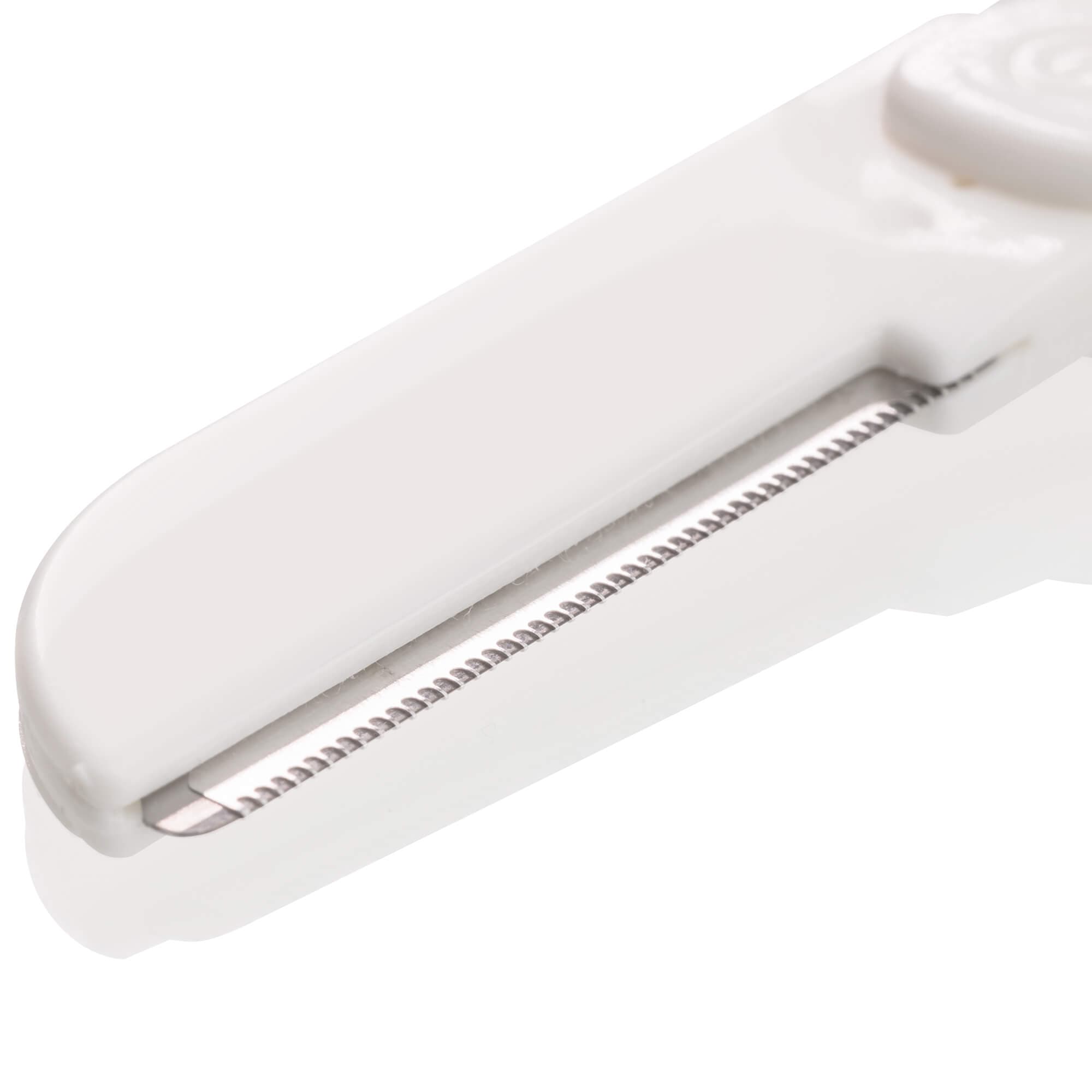
The best dermaplaning razor for the face is a single-edge facial razor with a fresh, replaceable blade and a foldable safety handle. That is the whole answer. Not an eyebrow razor, not a multi-blade body razor, and not an electric "dermaplane device" that buzzes but does not exfoliate. The single-edge blade is what lets you lift peach fuzz and dead surface skin in one flat pass, and the replaceable part is what keeps it comfortable session after session.
The short version:
- Look for a single-edge blade. It sits flat against the skin and exfoliates as it de-fuzzes.
- The blade has to be replaceable, and you replace it every one to two sessions.
- A foldable safety handle protects the edge and your fingers between passes.
- Skip electric "dermaplane tools," multi-blade razors, and eyebrow razors for the full face.
- Price per session matters more than sticker price. A fresh blade is the thing you are actually buying.
What makes a dermaplaning razor good
Three things carry it, and everything else is packaging.
A single-edge blade. Dermaplaning is exfoliation, not just hair removal. A single flat edge held at a low angle scrapes off the dull top layer of dead skin at the same time it takes the vellus hair. Multi-blade razors lift each hair and cut it below the surface, which is great for legs and wrong for a face: no exfoliation, and more chance of ingrown hairs and irritation.
A fresh, replaceable edge. A sharp blade glides. A dull one drags, and drag is the actual cause of the redness and small bumps most people blame on dermaplaning itself. That is why a good razor is built around swapping the blade every one to two sessions, not sharpening or reusing one forever.
A foldable safety handle. The blade folds back into the handle when you are not using it. That protects the edge between passes so it stays sharp, and it means you can rinse and refold mid-session without a plastic guard getting in the way of the pass.
Tip
Judge a dermaplaning razor by its cost per session, not its shelf price. A pack that works out to about a dollar a use is doing the real job: giving you a fresh edge every time.
The tool types, compared
People search for "best dermaplaning razor" and land on five very different tools. Here is how they actually compare for facial dermaplaning.
| Tool | Blade | Exfoliates? | Good for facial dermaplaning? |
|---|---|---|---|
| Single-edge facial razor | One flat edge, replaceable | Yes | Yes, this is the tool built for it |
| Eyebrow razor | Tiny single edge | Barely, too small | Only for brows and small edges |
| Electric "dermaplane" device | Oscillating foil or trimmer | No | No, it trims hair without exfoliating |
| Multi-blade body razor | 3 to 5 blades | No | No, made for legs, risks ingrowns |
| Surgical scalpel (#10) | Very sharp, professional | Yes | Only in a professional's hands |
The eyebrow razor is the honest near-miss. It uses the right kind of blade, just too small to cover a cheek efficiently, so it is a fine companion tool for shaping brows and hairlines but a slow choice for the full face. The electric device is the common trap: it looks modern, but a foil trimmer skims hair off and leaves the dead skin behind, so you lose the exfoliation that makes dermaplaning worth doing.
Single blade or multiple?
Single, every time, for the face. The reason is mechanical. A multi-blade razor works by "lift and cut": the first blade tugs the hair up, the next cuts it, and it retracts below the skin line. On the body that gives a close shave. On the face it means no surface exfoliation, a higher chance of ingrown hairs on the fine vellus hair, and more passes over the same spot, which is exactly what irritates delicate facial skin. A single edge held nearly flat does the opposite: one light pass, hair and dead skin lifted together, nothing tugged from below.
How many blades you actually need
Because you replace the blade every one to two sessions and dermaplane every two to four weeks, a small pack does not last as long as it looks. The math is straightforward.
At a session every two to four weeks, a six-pack covers roughly three to five months, and a nine-pack covers roughly four to six. Both work out to around a dollar per session, which is the number worth comparing against sixty to a hundred and twenty dollars for a professional pass.
If you already know you love the ritual, the jasclair Dermaplaning Razor 9-Pack is the better value per session and the one to keep in the drawer. If you are still deciding whether at-home dermaplaning is for you, the 6-pack starter set is the same blade in a smaller supply, so you can try it without committing to a larger pack. Either way, the blade is identical: a single foldable edge made for facial use.
The one accessory that matters
A dermaplaning razor works far better with a few drops of glide oil first. Friction, not the blade, causes most bad sessions. If you are choosing an oil, here are the ones that work and the ones to skip.
Mistakes when choosing a razor
- Buying an eyebrow razor for the whole face. Right blade, wrong size. Use it for brows, not cheeks.
- Choosing an electric device because it looks advanced. It trims hair and skips the exfoliation.
- Reusing a dull blade to save money. A dull edge drags and irritates. The blade is a consumable, like a toothbrush head.
- Reaching for a multi-blade razor from the shower. Built for legs, wrong for a face, and a common source of ingrowns on vellus hair.
Once you have the right razor, the full step-by-step method is here. The tool matters less than the technique, but the wrong tool makes good technique impossible.
FAQ
What is the best dermaplaning razor for the face? A single-edge facial razor with a fresh, replaceable blade and a foldable safety handle. The single edge exfoliates as it removes peach fuzz, which multi-blade and electric tools cannot do.
Is a single-blade or multi-blade razor better for dermaplaning? Single-blade. A single flat edge sits against the skin to exfoliate and lifts vellus hair in one pass. Multi-blade razors cut below the surface, skip the exfoliation, and raise the risk of ingrown hairs on fine facial hair.
Are electric dermaplaning tools worth it? For exfoliation, no. An electric foil or trimmer removes hair but leaves the dull surface layer behind, so you miss the smoothing effect that makes dermaplaning worthwhile. A manual single-edge razor does both jobs.
How often should I replace a dermaplaning blade? Every one to two sessions. A fresh edge glides; a dull one drags, and drag is what causes redness and bumps. Treat the blade as a consumable.
Can I use an eyebrow razor to dermaplane my face? It uses the right kind of blade but is too small to cover the face efficiently. Keep it for shaping brows and hairlines, and use a full-size facial razor for the cheeks and jaw.
I keep an eyebrow razor for touch-ups and a full-size one for the actual pass. Trying to dermaplane a whole cheek with the little one is how I learned the size of the blade is not a detail.