
How to Use a Dermaplaning Razor (Without Irritation)
How to hold, angle, and move a dermaplaning razor so it glides without nicks or irritation, plus when to fold it away and swap the blade.
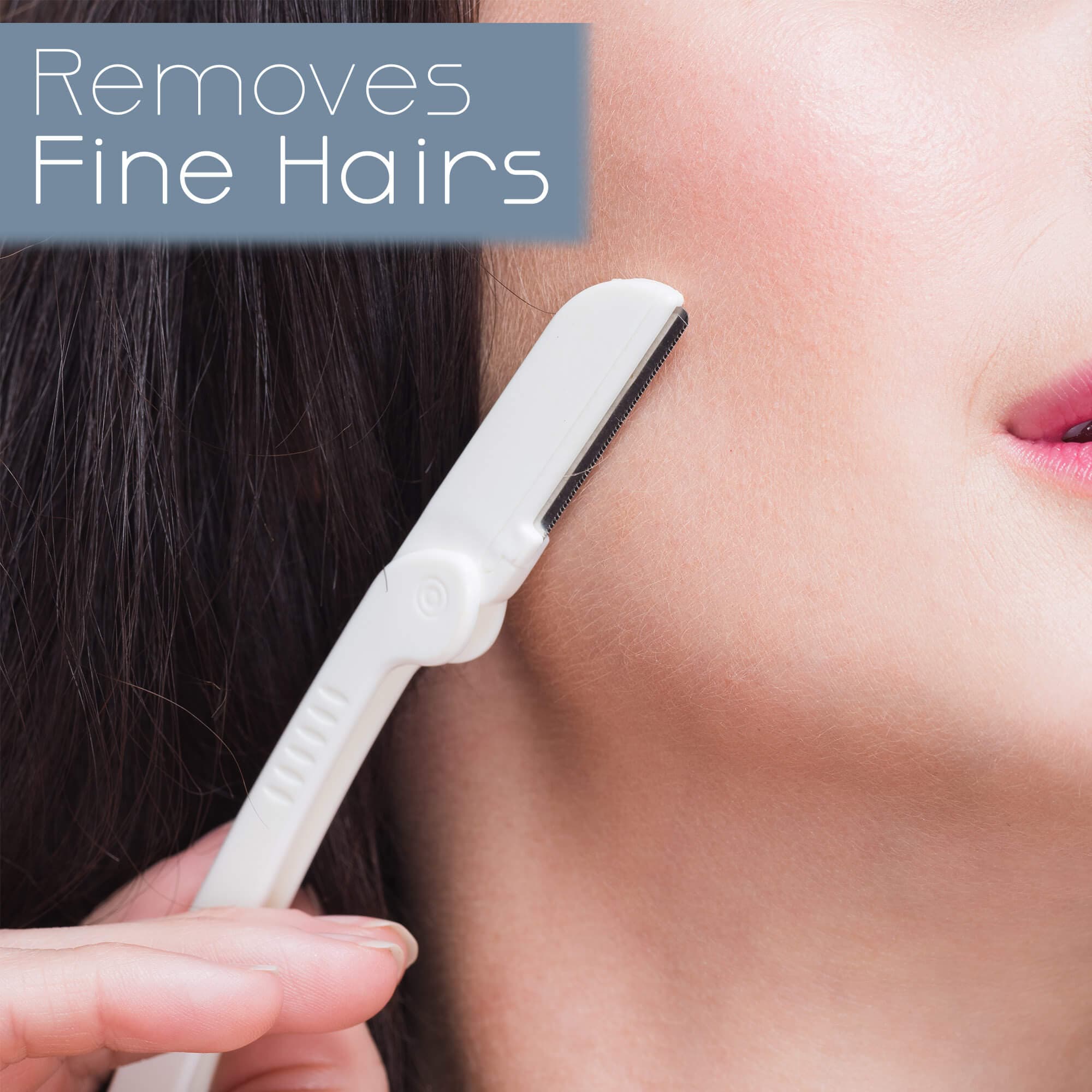
Using a dermaplaning razor well comes down to four things: a low angle, taut skin, light pressure, and a fresh blade. Hold the blade almost flat against the skin, pull the area tight with your free hand, and take short downward strokes without pressing. Do that and the blade glides, lifts the peach fuzz and dull surface skin, and leaves no redness behind. Almost every bad session traces back to one of those four going wrong.
The short version:
- Start on clean, completely dry skin, with a few drops of oil for glide.
- Hold the blade at a low angle, closer to flat than upright.
- Pull the skin taut with your free hand so there is no slack for the blade to catch.
- Use short, light, downward strokes. Let the edge do the work, add no pressure.
- Rinse every few strokes, fold the handle closed between passes, replace the blade every one to two sessions.
This is the tool technique. For the full routine around it, the cleanse, the aftercare, the SPF, see the 7-step at-home method.
Hold the blade almost flat
Angle is the single most important thing, and most people hold the razor too upright out of instinct. Aim for a low angle against the skin, roughly fifteen to thirty degrees, closer to flat than standing up. A steep angle digs the edge in and scrapes; a low angle lets it skim.
Grip the handle loosely between your thumb and first two fingers, the way you would hold a pencil, not a fist. A loose grip keeps the angle shallow on its own and stops you from bearing down.
Tip
If you feel the blade catching or hear a scratchy drag, your angle is too steep or the skin is not taut. Lower the handle toward flat and pull the skin tighter before you try again.
Pull the skin taut
Vellus hair and dead skin lift cleanly only off a flat, tight surface. With your free hand, stretch the patch of skin you are about to pass so there is no give in it. Work one small section at a time: a cheek, then the jaw, then the upper lip. Taut skin is what turns a scrape into a glide, and it is the step people skip most.
Short, light, downward strokes
Move in short strokes, about an inch or two, in the direction the hair lies, which on the face is generally downward and outward. Keep each stroke light. The weight of the razor plus a low angle is enough; pressure is what nicks skin and causes irritation. Overlap your passes slightly so you do not leave stripes, but do not go over the same spot again and again. One or two clean passes beats ten anxious ones.
Oil first, always
A dry blade drags no matter how good your angle is. A few drops of a light, non-comedogenic pre-shave oil give the edge a surface to glide over. Friction, not the blade, is what causes most redness and bumps.
Rinse and fold between passes
Every few strokes, rinse the blade under water to clear the dead skin and hair it has collected. A loaded blade drags, and drag irritates. Between areas, or if you set the razor down, fold the handle closed over the edge. On the jasclair foldable dermaplaning razor the blade tucks into the handle, which protects both the edge and your fingers, and keeps the blade sharp for the next pass. There is no cap to lose and no exposed edge on the counter.
When to replace the blade
Replace the blade every one to two sessions. This is the part people resist, because the blade still looks fine, but a dermaplaning edge dulls fast against skin and stubble. A dull blade is the most common reason a session that used to feel smooth suddenly tugs and reddens. If you notice more drag than usual, or you have to go over an area twice to clear it, the blade is done. Treat it as a consumable, like a toothbrush head, not a tool you sharpen.
Common mistakes that cause irritation
- Too much pressure. The most common one. Let the edge and the angle do the work.
- Skipping the oil. A dry pass drags even with perfect technique.
- Holding the razor too upright. A steep angle scrapes instead of glides.
- Reusing a dull blade. It drags, and drag is what causes the redness.
- Going over the same spot repeatedly. One or two clean passes is the whole session.
- Dermaplaning wet skin. Water and product make the blade catch. Start bone dry.
FAQ
What angle should I hold a dermaplaning razor at? A low one, roughly fifteen to thirty degrees, closer to flat against the skin than upright. A steep angle digs in and scrapes; a low angle lets the blade glide and exfoliate.
How much pressure should I use? As little as possible. The weight of the razor at a low angle is enough. Pressing down is what nicks skin and causes irritation, so keep every stroke light.
How often should I replace the blade? Every one to two sessions. A fresh edge glides; a dull one drags and reddens the skin. If you feel more drag than usual, swap the blade.
Can I use a dermaplaning razor every day? No. Dermaplane every two to four weeks. That matches how long skin needs to rebuild the exfoliated surface layer. Doing it daily outpaces recovery and leads to irritation.
Does using a dermaplaning razor hurt? It should not. At a low angle on taut skin it feels like a light sweeping sensation, no pulling or stinging. Pain almost always means too much pressure, too steep an angle, or a dull blade.
The thing that finally made mine feel effortless was slowing down and lowering the handle. I was holding it like a pen I was writing with, upright, when it wanted to be almost lying flat.