
Can You Use Coconut Oil for Dermaplaning? (Skip It)
Coconut oil is the most-recommended oil you shouldn't put on your face before a blade. Why it backfires for dermaplaning, and the lighter oils that work.
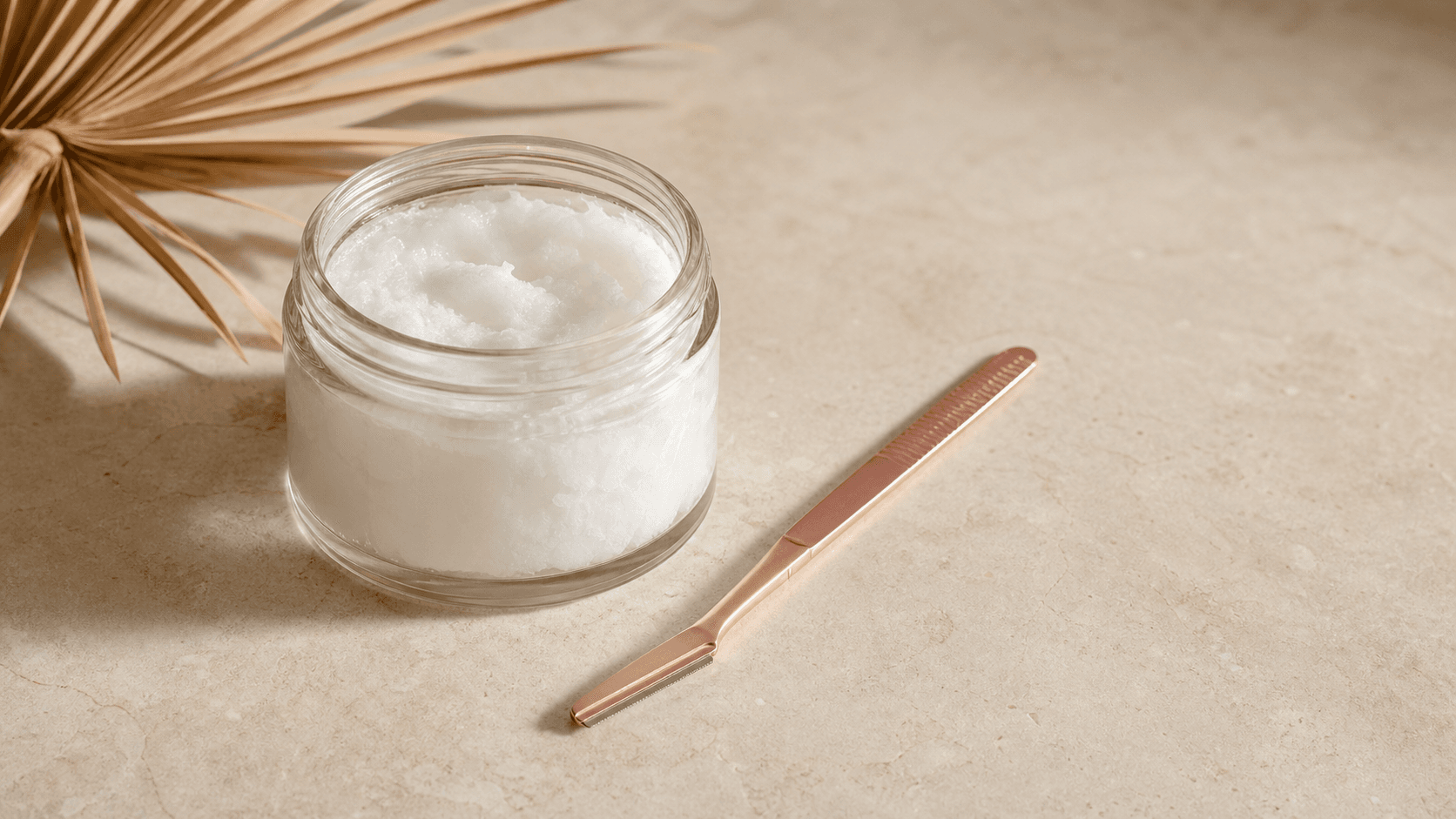
You can, but on your face you probably shouldn't. Coconut oil sits high on the comedogenic (pore-clogging) scale — around a 4 out of 5 — and it's occlusive, so it forms a heavy film the blade skates over instead of gliding through. For body hair it's fine. For facial dermaplaning, it's one of the more reliable ways to break yourself out.
The short version:
- Coconut oil rates ~4 on the 0–5 comedogenic scale: high risk of clogging pores.
- It's occlusive and heavy, so the blade skates rather than glides.
- Dermaplaning leaves skin more permeable for a few minutes — the worst moment for a pore-clogging oil.
- Use a lightweight, low-comedogenic oil instead: jojoba, grapeseed, rosehip, or squalane.
Why people reach for coconut oil
It's in every kitchen, it's cheap, and it has a reputation as a do-everything skincare oil. For some uses that reputation is earned — it's a decent body moisturizer and a fine hair treatment. The problem is that "good for skin in general" and "good for dermaplaning" are not the same test.
Why it backfires for dermaplaning
Two reasons, and they compound.
It clogs pores. Coconut oil is generally rated around a 4 on the comedogenic scale. It's high in lauric acid — a large, saturated molecule that tends to sit on the surface and block pores rather than absorb. On most facial skin, that's a breakout waiting to happen.
It's occlusive, so the blade skates. A pre-shave oil's whole job is to let the blade glide in a thin, even pass. Coconut oil forms a thick, waxy film. The blade slides over the top of it instead of moving smoothly against the skin, so you get an uneven pass and miss the closeness that makes dermaplaning worth doing.
Now add timing. Dermaplaning removes the top layer of dead skin, which leaves your skin more permeable for a few minutes afterward. That's exactly when you don't want a comedogenic oil making contact.
What about coconut oil after dermaplaning?
Same answer, for the same reason. The post-dermaplaning window is when your skin is most absorbent — a great moment for a light, calming layer, and a bad one for a heavy occlusive oil. If you want an aftercare step, reach for something lightweight, or a snail mucin serum in those first few minutes.
What to use instead
Stick to oils that are light and low on the comedogenic scale:
- Jojoba (~2) — close to your skin's own oil, absorbs clean.
- Grapeseed (~1) — very light, good for oily skin.
- Rosehip (~1) — light, calming, dry-touch finish.
- Squalane (~0) — silky and weightless, great for sensitive skin.
For the full breakdown of which oils work and which to skip, see the best oils for dermaplaning. If you'd rather not mix your own, the jasclair pre-shave oil is a blend of lightweight, non-comedogenic oils made for facial dermaplaning — and it's unscented, which rules out the fragrance issue that disqualifies a lot of "multi-use" oils.
FAQ
Can you dermaplane with coconut oil? You can, but on the face you should not. It works as a glide layer in the mechanical sense, but its high comedogenic rating and occlusive film make it one of the more reliable ways to break out on freshly exfoliated skin. Reach for a lighter oil.
Is coconut oil bad for dermaplaning? For the face, it's a poor choice. It rates about a 4 on the comedogenic scale and is occlusive, so it clogs pores and makes the blade skate instead of glide.
Can I use coconut oil after dermaplaning? It's not recommended. Your skin is most permeable right after dermaplaning, so a heavy, pore-clogging oil is most likely to cause breakouts then. Use a lightweight oil or a hydrating serum.
What oil should I use instead of coconut oil? A lightweight, low-comedogenic oil — jojoba, grapeseed, rosehip, or squalane — or a blend formulated for dermaplaning.
Does coconut oil clog pores? For many people, yes. It's rated around a 4 out of 5 on the comedogenic scale, one of the higher ratings among common oils.
I learned this one the hard way years ago — a coconut-oil pass before a big event, and a cluster of small bumps along my jaw two days later. The oil wasn't the villain; using it on my face was.