
How to Remove Peach Fuzz from Your Face: Every Method Compared
Peach fuzz is vellus hair, and five methods remove it. How dermaplaning, waxing, threading, depilatory cream, and laser compare on the face, and why laser is the wrong tool for this one.
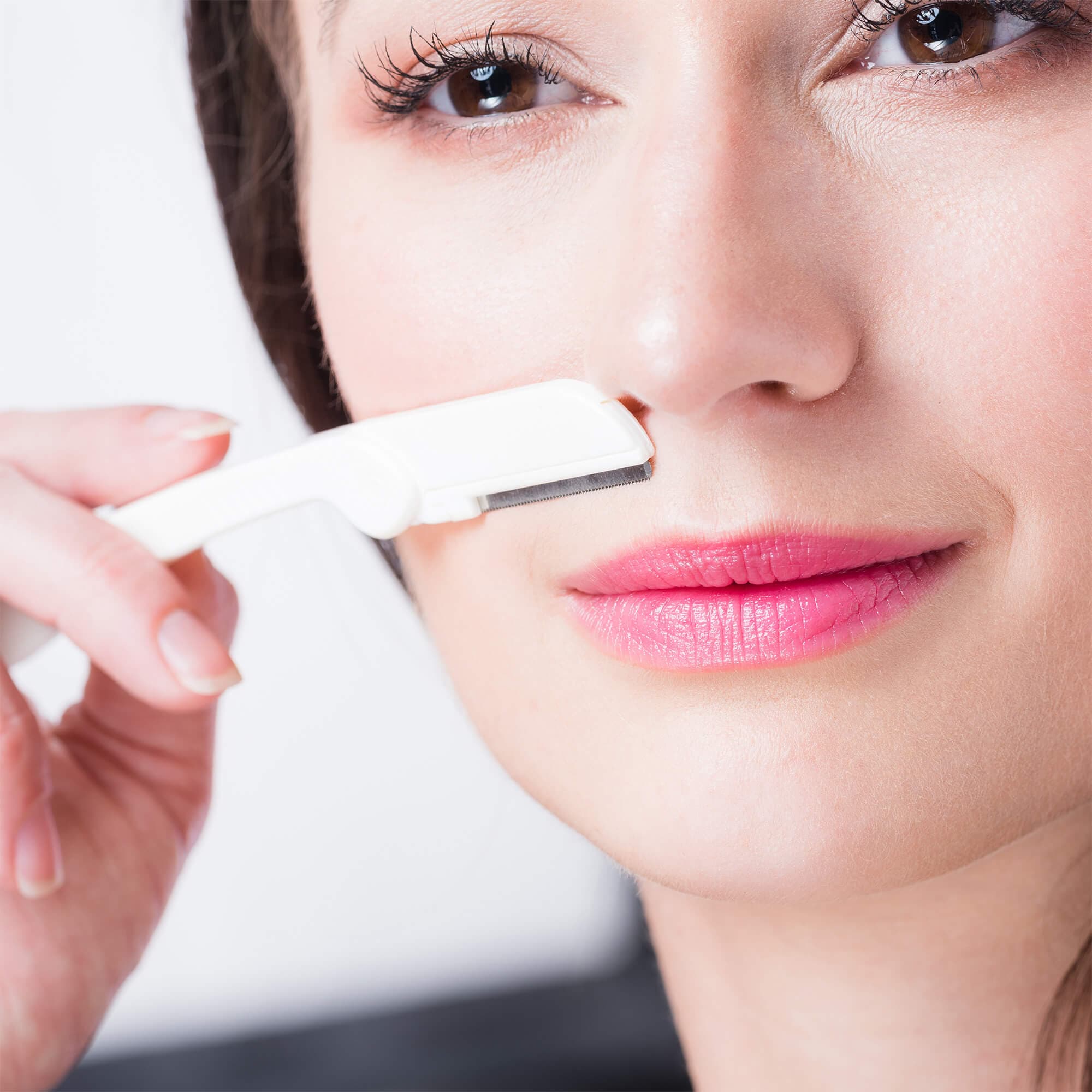
Peach fuzz is vellus hair, the fine, soft, pale hair most of us carry across the cheeks, jaw, and upper lip. Five methods will remove it, and they are not equally suited to the face. This page compares all five, settles the "grows back thicker" question, and explains why the most expensive option is also the worst one for this particular hair.
The short version:
- Peach fuzz is vellus hair. Removing it also lifts the dull layer of dead skin, so makeup and serums sit better.
- Dermaplaning is the best all-round choice for the face: about ten minutes, painless at the right angle, roughly a dollar a session.
- Waxing and threading both pull from the follicle, which is more irritation than fine facial hair warrants.
- Laser is the wrong tool here. It targets pigment, and vellus hair is nearly colorless.
- It does not grow back thicker or darker. A blade cuts at the surface and never touches the follicle.
- Skip it over active breakouts, and always follow with SPF.
What peach fuzz actually is
Peach fuzz has a proper name: vellus hair. It is the fine, short, lightly colored hair that covers most of the face and body. It is different from terminal hair, the thicker, darker, deeper-rooted hair of the brows and scalp. The two are separate hair types set by the follicle, and that distinction is the whole reason the "grows back thicker" worry does not hold up.
Vellus hair is harmless. The reason people remove it is texture. Fine hair traps oil, dead skin, and product, which leaves a slightly uneven surface that catches light and grips foundation. Take the fuzz and the dead surface skin away in one pass and the skin reads smoother, and whatever you put on next has less to sit on top of.
Does peach fuzz grow back thicker?
No. This is the question I get most, so here is the honest answer with the mechanism behind it.
Shaving does not change a hair's thickness, color, or growth rate. According to the Mayo Clinic, that is a myth. What actually happens is this: a blade cuts each hair straight across, so it grows back with a blunt tip instead of the tapered point it had before. A blunt tip feels stubbly and can look a shade darker as it emerges. That is a tactile and visual illusion, not a change in the follicle.
For vellus hair the point is almost moot. Peach fuzz is far too fine for a blunt regrowth tip to register the way coarse body hair might. It comes back the same fine hair it was.
How the removal methods compare
Dermaplaning is not the only way to remove peach fuzz, but for the face it is the one that balances speed, comfort, and cost. Here is the honest comparison.
| Method | Speed | Comfort | Cost | Lasts |
|---|---|---|---|---|
| Dermaplaning (facial razor) | 5-10 min at home | Painless, a light scrape at most | About $1 per session | 2-4 weeks |
| Waxing | 15-30 min, usually in-salon | Pulls from the follicle | Roughly $10-25 per area, per visit | 3-6 weeks |
| Threading | 10-20 min in-salon | Repeated plucking | Roughly $10-40 per visit | 3-6 weeks |
| Depilatory cream | 5-10 min at home | Painless, can sting sensitive skin | Roughly $5-15 per tube | 1-2 weeks |
| Laser | Many sessions over months | Stinging, snapping sensation | Hundreds to thousands | Long-term reduction |
One note on laser, since people ask: it targets pigment in the hair. Vellus hair is fine and mostly colorless, which makes it a poor laser candidate. That is a real reason a facial razor stays the practical choice for peach fuzz specifically.
Why dermaplaning wins for the face
Dermaplaning is the only one of the five that removes the hair and the dull surface layer of dead skin in the same pass. That is the reason it is worth the ten minutes: you are not just taking the fuzz off, you are resurfacing at the same time, which is what makes foundation sit flat afterward.
The technique is short enough to learn once. Clean, dry skin, a few drops of a light non-comedogenic oil as a glide layer, the blade held almost flat, short downward strokes, rinse often. The single point most people miss: friction, not the blade, causes the redness and small bumps that get blamed on dermaplaning. Skip the glide layer and you will feel it.
For the full walkthrough, see 7 steps to dermaplane at home safely. If the question is specifically how to handle the tool, how to use a dermaplaning razor covers angle, pressure, and when to swap the blade.
Always finish with SPF
Exfoliated skin burns faster. Apply a broad-spectrum SPF every morning after a session, without exception.
When to skip a pass
Dermaplaning is gentle, but a few situations call for waiting.
- Active breakouts. Never run a blade over an active pimple or inflamed skin. Work around it, or wait until it clears.
- Very reactive or compromised skin. If your barrier is irritated, give it a few days first.
- New to it. Do a small patch test on the cheek to read how your skin responds before a full pass.
Tip
Every 2-4 weeks is the right rhythm for most people. More often than that can outpace how quickly the skin barrier recovers, which is when irritation shows up.
The jasclair routine
Peach fuzz removal is really three steps, and they map to the same order every time: oil, then blade, then serum. The pre-shave oil creates the glide layer. The foldable dermaplaning razor does the pass, and if you are new to it the 6-pack starter set is the same blade in a smaller supply. The snail mucin serum settles the skin while it is still permeable, which is exactly when it absorbs best. You do not need all three to get a clean result, but the oil in particular earns its place, because friction is the actual cause of most bad dermaplaning experiences.
FAQ
Is it safe to remove peach fuzz from your face? Yes, when the skin is clean and clear. Hold the blade at a low angle over taut skin, use a glide oil, and avoid active breakouts. Follow with SPF.
How fast does peach fuzz grow back? Vellus hair regrows at its usual rate, so most people see the fuzz return within two to four weeks. That is the rhythm to work to as well, since passing more often than the barrier recovers is what causes irritation.
Does dermaplaning remove peach fuzz permanently? No. Vellus hair regrows at its normal rate, so results last a few weeks. Nothing at-home removes it permanently, and laser works poorly on fine, colorless hair.
Can I remove peach fuzz without a razor? You can wax, thread, or use a depilatory cream, but each has tradeoffs on the face. Waxing and threading pull from the follicle, and creams can irritate freshly exposed skin. A blade is the gentlest and most controlled at home.
I still start on my cheekbones and work down. It just feels more controlled that way, and it is the spot where the difference in texture shows up first.