
What Is Dermaplaning? Benefits, Safety & How-To
What dermaplaning is, how it works, what it costs professionally versus at home, how long results last, and whether you are a candidate.
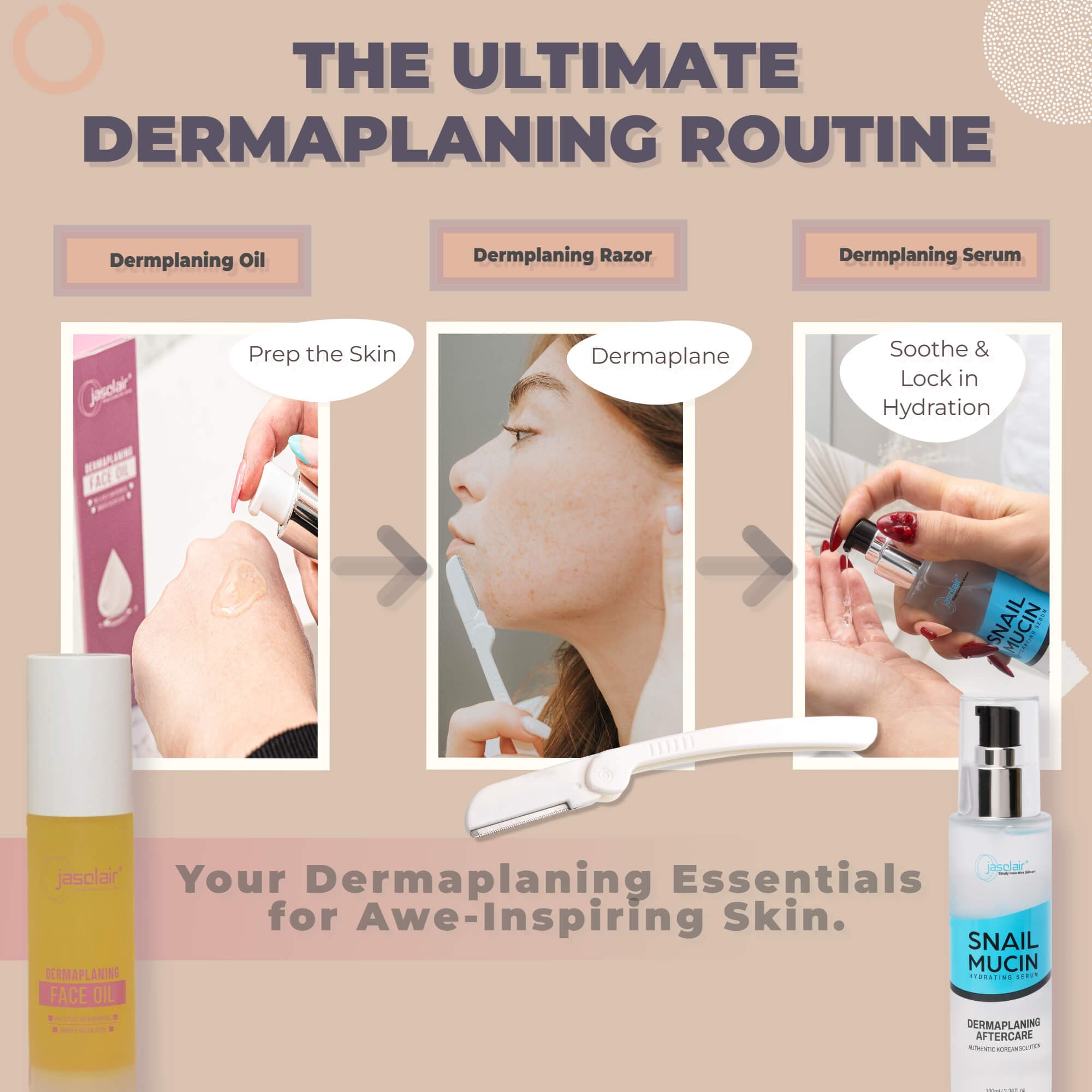
Dermaplaning is a manual exfoliation technique that uses a single blade to remove the top layer of dead skin and vellus hair, the fine peach fuzz on your face. The result is a smoother surface, a brighter look, and makeup and serums that go on more evenly. It has been a staple of professional aesthetics for decades, and it works just as well at home with the right tool and technique.
The short version:
- It removes dead surface skin and peach fuzz in one pass, so it exfoliates and de-fuzzes at once.
- Done professionally it uses a surgical scalpel; at home it uses a purpose-built foldable razor.
- It does not hurt at the right angle, and the hair does not grow back thicker.
- Most people repeat it every 2 to 4 weeks, the time skin needs to rebuild the exfoliated layer.
- Skip it over active breakouts, and always follow with SPF.
What is dermaplaning?
Dermaplaning is a manual exfoliation method that uses a single-edge blade to remove the top layer of dead skin cells and vellus hair (peach fuzz) from the face.
It is sometimes described as upgraded face shaving, which is technically accurate but undersells the exfoliation. The difference between dermaplaning and standard shaving is the blade design and the technique: a dermaplaning tool is built for surface exfoliation, not just hair removal.
The technique is simple. Hold the skin taut and pass the blade in short, feathery strokes at a low angle. The result is a smoother, brighter complexion, the kind of glow that would otherwise take a chemical peel or microdermabrasion to reach.
What it does for your skin
- Removes the buildup of dead skin that makes skin look dull
- Takes off vellus hair that traps oil and debris against the skin
- Creates a smooth surface for more even makeup application
- Increases how well serums, oils, and moisturizers absorb
- Encourages surface cell turnover
- Softens the look of fine lines and uneven texture temporarily
Professional vs. at-home dermaplaning
Professional treatment uses a #10 surgical scalpel. The blade is sharper and larger than an at-home tool, and a licensed aesthetician or dermatologist performs the pass on prepped, dry skin. Cost typically runs $60 to $120 per session depending on location and provider.
At-home dermaplaning uses a purpose-built dermaplaning razor, a single-edge tool in a safety handle, usually foldable. The blade is made for consumer use: still effective, with a built-in safety margin. With a Dermaplaning Razor 9-Pack, the cost works out to about $1.11 per session, or the 6-pack if you want to try it first.
| Professional | At-home | |
|---|---|---|
| Cost per session | $60 to $120 | ~$1.11 |
| Location | Salon or dermatology office | Your bathroom mirror |
| Time | 30 to 60 minutes, plus travel | 10 to 15 minutes |
| Blade | #10 surgical scalpel | Single-edge safety razor |
| Frequency | Every 4 to 6 weeks | Every 2 to 4 weeks |
For most people with everyday concerns, texture, peach fuzz, and dullness, at-home dermaplaning produces results that are functionally comparable to a professional session for a fraction of the cost. The technique is what carries it, and the full step-by-step method is here.
Tip
Replace the blade every one to two sessions. A fresh edge glides; a dull one drags, and drag is what causes irritation.

What to expect afterward, and the risks
Dermaplaning is low-risk as facial treatments go, but low-risk is not no-risk, and the honest version is worth having before a first pass.
What is normal. Mild redness for an hour or two, and skin that feels tighter and more sensitive than usual for the rest of the day. That is the exfoliation showing, not damage.
What is avoidable. Nicks come from pressure, not from the blade being sharp: a fresh edge at a low angle barely registers. Irritation and small bumps come from friction, which is the entire reason the glide oil matters. Breakouts in the days after a session usually trace back to something heavy applied onto freshly permeable skin.
What to watch for. Skin is more sun-sensitive after any exfoliation, so SPF stops being optional. If redness runs past a day, or stinging persists, the pass was too aggressive. Lengthen the gap between sessions and lighten the pressure.
Who should not dermaplane
Skip it, or ask a professional first, if any of these apply.
- Active acne or inflamed breakouts. A blade can move bacteria across the face and aggravate skin that is already inflamed.
- An active cold sore. A blade can spread the virus to other areas of the face.
- A flare of eczema, psoriasis, or rosacea. Exfoliating a barrier that is already compromised makes it worse, not better.
- Recent isotretinoin use. Exfoliating procedures are commonly advised against during a course and for a period after it, because the skin is markedly more fragile. Your prescriber is the right person to ask about timing.
- A very reactive barrier. If most products sting, patch-test one cheek and wait a day before committing to a full pass.
None of this makes dermaplaning risky for most people. It is a mechanical exfoliation with no acid component, which is why it is generally well tolerated even on sensitive skin. The list above is about the particular weeks when a blade is the wrong tool.
FAQ
Does dermaplaning hurt? No. It is a light sweeping feeling against the skin, with no pulling, tugging, or stinging. Even on sensitive skin, most people find it comfortable. Pain usually means too much pressure or a dull blade.
Will the hair grow back thicker? No. Shaving does not change hair's thickness, color, or growth rate, and shaving vellus hair has no effect on the follicle. The belief that it grows back coarser comes from the blunt-cut tip replacing the natural tapered end, not from any change in the hair itself.
How long do dermaplaning results last? Usually 3 to 4 weeks, which is also how long skin needs to rebuild the exfoliated layer before the next session. Doing it more often does not improve results; it interrupts the healing cycle.
Is dermaplaning safe for deeper skin tones? Yes. It is a mechanical exfoliation with no acid component, so it does not carry the hyperpigmentation risk that chemical peels can pose on melanin-rich skin.
Can I dermaplane if I have acne? Not over active breakouts, since a blade can spread bacteria and worsen inflamed skin. Work around isolated breakouts or skip them. On skin prone to non-cystic congestion, dermaplaning can actually help by removing the debris that clogs pores.
What should I use after dermaplaning? Apply your serum right away, while skin is at peak absorption. A snail mucin serum or a lightweight hyaluronic acid serum in the first few minutes absorbs better than it would on untreated skin. Follow with moisturizer, and SPF every morning.
Wait before actives
Hold off on AHAs, BHAs, and retinoids for 24 to 48 hours after dermaplaning. Freshly exfoliated skin absorbs more aggressively, and strong actives applied too soon can sting and irritate.
The full ritual
If you want the most from a session, the complete routine is:
- Pre-shave oil to remove friction and protect the skin
- Dermaplaning with a fresh razor at a low angle
- Cool water rinse, then pat dry
- Snail mucin recovery serum applied immediately
- Moisturizer to seal everything in
- SPF in the daytime
The blade does the exfoliation. The oil and the serum are what separate a good session from a great one: one removes the friction going in, the other feeds the skin while it is most absorbent.
I used to treat the blade as the whole routine and wonder why my skin still felt tight afterward. It was never the blade. It was skipping the oil before and the serum after.